Tablespoon of butter in grams is 14, a tablespoon of flour only 7.5
A level tablespoon of butter weighs about 14 grams, flour only 7.5, and table salt 18. Here's a tablespoon to grams chart for 8 baking staples, the teaspoon math, and why the spoon you grab can double the salt in a recipe.
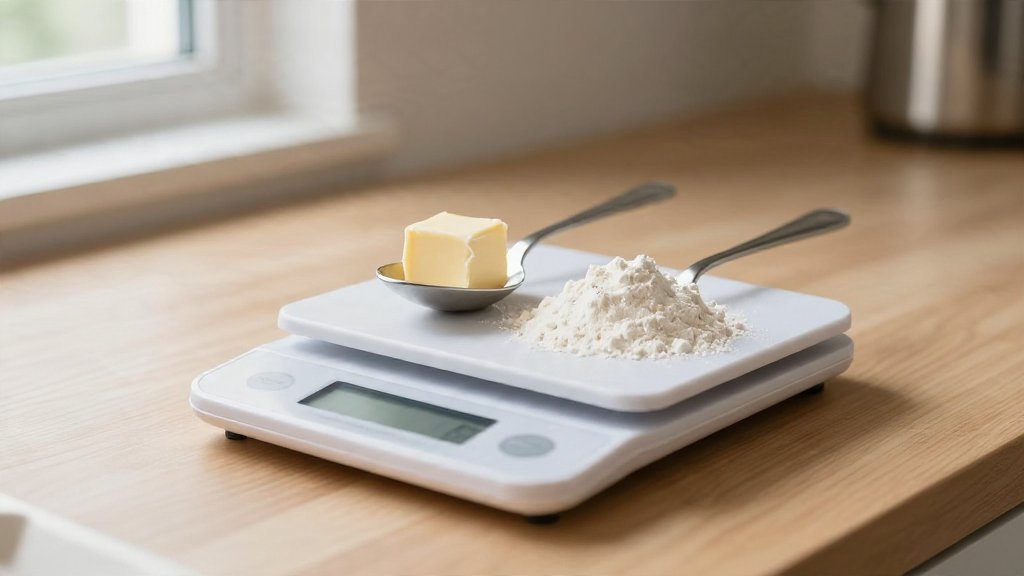
Butter and flour fill the same spoon, but they don't weigh the same. A level tablespoon of butter in grams comes to about 14.1, while a level tablespoon of all-purpose flour weighs just 7.5. Honey lands at 21. Same spoon, nearly a threefold spread.
That's because a tablespoon measures space, not mass. A US tablespoon holds about 14.8 milliliters, half of a 29.57 mL US fluid ounce, and whatever you pack into that space sets the weight. If you've ever wondered why a metric recipe and an American one never quite agree, tablespoon to grams is usually where they part ways.
How many grams in a tablespoon of common baking staples
The figures below come from King Arthur Baking's ingredient weight chart. Where the chart lists a full cup, we divided by 16, since a cup holds 16 tablespoons. Teaspoons are a third of each tablespoon value.
| Ingredient | 1 Tablespoon | 1 Teaspoon |
|---|---|---|
| Butter | 14.1 g | 4.7 g |
| All-purpose flour | 7.5 g | 2.5 g |
| Granulated sugar | 12.4 g | 4.1 g |
| Brown sugar, packed | 13.3 g | 4.4 g |
| Confectioners' sugar | 7.1 g | 2.4 g |
| Honey | 21 g | 7 g |
| Table salt | 18 g | 6 g |
| Diamond Crystal kosher salt | 8 g | 2.7 g |
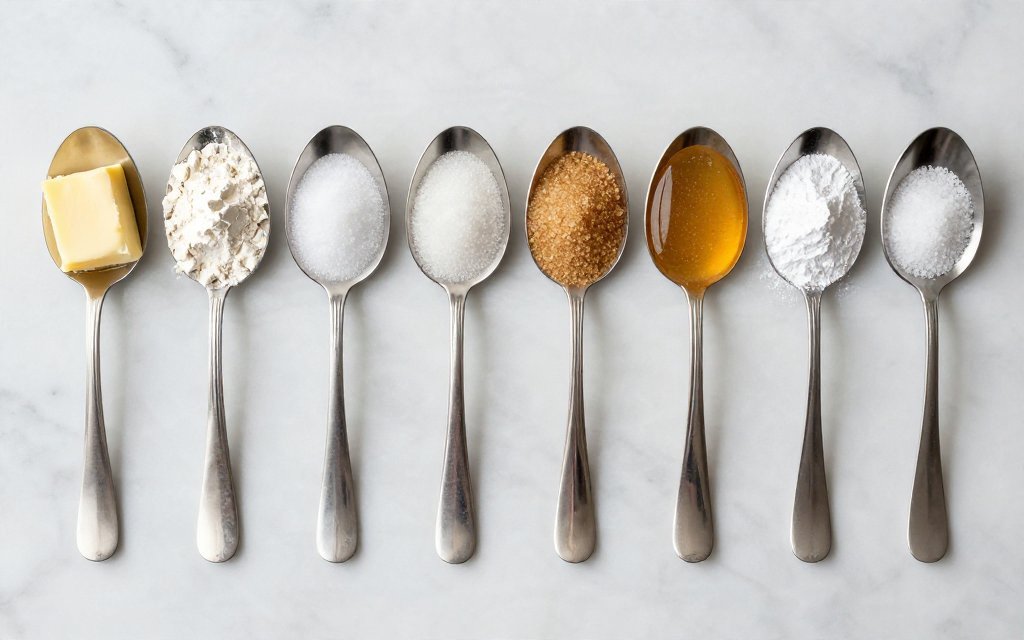
Why flour weighs half as much as butter
Flour is mostly air. A cup of it weighs 120 grams on King Arthur's chart, while a cup of milk or water weighs 227. Butter is dense fat and water, so it behaves almost like a liquid on the scale. Powders and crystals sit lower, and syrups like honey sit higher.
Rule of thumb: liquids and butter run about 14 grams per tablespoon, fluffy powders run 7 to 8, and sticky syrups like honey push past 20.
A tablespoon of butter in grams, and why sticks make it easy
A US stick of butter is half a cup, or 8 tablespoons, and it weighs 113 grams. Divide and you get 14.1 grams per tablespoon, which most recipes round to 14. We dug into the stick itself in our guide to how much is a stick of butter.
Wrapper lines are handy, but a scale is faster
If a European recipe asks for 30 grams of butter, that's a little over 2 tablespoons. Going the other way, from grams to tablespoons, just divide the gram figure by 14.
Tablespoon to grams for salt is where recipes go wrong
Salt is the ingredient where volume lies the most. King Arthur lists a tablespoon of table salt at 18 grams, Morton's kosher at 16 grams, and Diamond Crystal kosher at just 8 grams. Those flaky Diamond crystals are hollow pyramids, so they leave more air in the spoon.
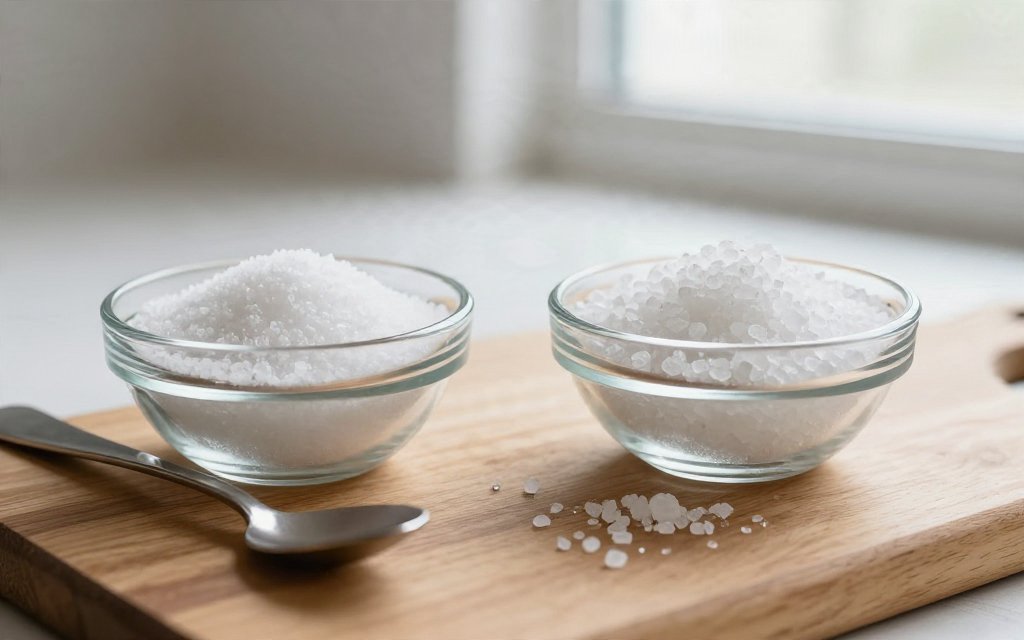
A tablespoon of table salt weighs 18 grams. A tablespoon of Diamond Crystal weighs 8. If a recipe was written for one and you use the other, weigh it.
Grams in a teaspoon for baking powder, soda and yeast
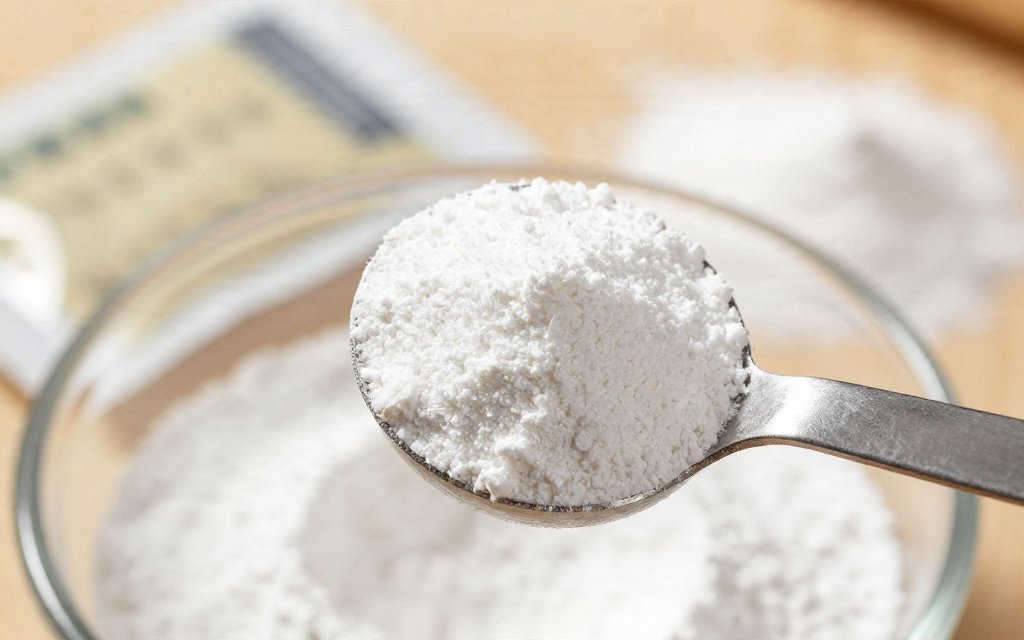
Leaveners come in small doses, which makes the teaspoon to grams step matter more, not less. King Arthur puts 1 teaspoon of baking powder at 4 grams and half a teaspoon of baking soda at 3 grams, so a full teaspoon of soda is about 6.
Instant yeast is 7 grams for 2 1/4 teaspoons, the amount in a standard packet, and 9 grams for a full tablespoon. Our yeast packet guide has the rest of the yeast numbers.
How many ounces is a tablespoon, by volume and by weight
By volume the answer is simple: two tablespoons make one US fluid ounce. Nutrition labels round it even further. Under the FDA's labeling guidance, a tablespoon counts as 15 mL, a teaspoon as 5 mL, a fluid ounce as 30 mL, and an ounce of weight as 28 grams.
So 1 ounce is how many tablespoons?
By weight, it depends on the ingredient again. An ounce is 28.35 grams, so you divide that by the grams in one tablespoon. You can check any figure with our grams to ounces converter.
| Ingredient | Grams per tbsp | Tbsp per ounce |
|---|---|---|
| Butter | 14.1 | 2 |
| All-purpose flour | 7.5 | 3.8 |
| Granulated sugar | 12.4 | 2.3 |
| Honey | 21 | 1.35 |
| Table salt | 18 | 1.6 |
What a sloppy spoon costs you in a finished bake
Small errors in big ingredients rarely ruin anything. A heaping tablespoon of flour in a 2-cup loaf adds a few grams to 240, and nobody tastes that. Small errors in small ingredients are another story, because the dose is tiny to begin with.
Take a brine or a dry rub that calls for 2 tablespoons of Diamond Crystal, or 16 grams. Reach for table salt instead and you've added 36 grams, more than twice the salt. That's a ruined roast, not a rounding error, and it costs the price of the whole cut.
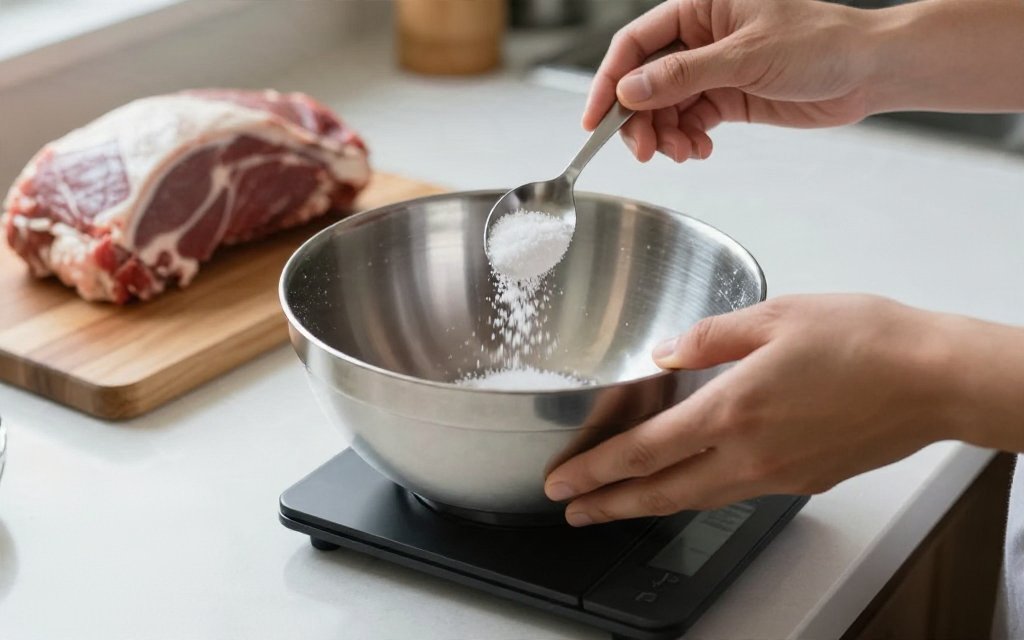
The smaller the amount, the more the method matters. Weigh anything under a tablespoon if the recipe gives grams.
A scale that reads in 1 gram steps handles all of this. If yours seems off, our nickel calibration trick takes two minutes.
Quick answers about tablespoons and grams
How many teaspoons are in a tablespoon?
Three. That's why every teaspoon figure in the chart above is one third of the tablespoon figure. A tablespoon of granulated sugar at 12.4 grams works out to about 4.1 grams per teaspoon.
How much water is a g in a tablespoon count?
Water weighs about 1 gram per milliliter, so a 14.8 mL tablespoon holds roughly 14.8 grams. King Arthur's chart, which rounds a cup of water to 227 grams, works out to 14.2. Either number is fine for cooking.
What is a tablespoon of flour in grams if I scoop it?
The 7.5 gram figure assumes flour spooned in and leveled off. Scooping straight from the bag packs it down, so you'll get more. If a recipe gives grams, skip the spoon entirely and weigh it.
How do I convert grams to tablespoons?
Divide the grams by the weight of one tablespoon of that ingredient. For 50 grams of granulated sugar, that's 50 divided by 12.4, or about 4 tablespoons. Our flour cups to grams chart covers bigger amounts.
Need to know what that spoonful really weighs? Download Scale for Grams and get an AI-powered weight estimate from a photo in seconds. Get the app here: iOS.
Scale for Grams
Need to Weigh Something?
Download Scale for Grams and get an AI weight estimate from a photo in seconds.
